
The Origin
A regenerative prototype that proved it could be done.
An agricultural initiative launched in Lebanon's Chouf District demonstrated that regenerative cooperative models could be systematised at scale. This prototype, developed through years of applied ecological practice in the mountains of Lebanon, became the foundation for the NASF framework.
The initiative ran for 1,400+ continuous days of on-ground oversight, spanning multiple seasons, labour structures, reinjection cycles, pricing conditions, and supply chain disruptions. Every component of the NASF framework was stress-tested against real market conditions before being documented into deployable protocols.
The initiative was not a theory. It was a working cooperative: regenerating soil, restructuring the economic model of the land, and transferring knowledge between generations of farmers. It produced something rare, a proof-of-concept that could be extracted, documented, and scaled beyond its original geography.
That proof-of-concept became the NASF framework: a systemic agricultural transformation model now designed for institutional deployment by NGOs, ministries, and international bodies including UN agencies.
Today, NASF extends beyond its institutional origins. The framework is available to startup businesses across the EU and Middle East, including early-stage agri-ventures, regenerative farming cooperatives, food system startups, and agri-tech companies who want to build on a proven model rather than start from scratch.
"An ecological cooperative model in the Chouf mountains of Lebanon, years of practice compressed into a deployable framework."
Rima Taha
The Structural Problem
Agricultural startups fail for predictable, preventable reasons.
Current Challenges
High Startup Instability: Extreme volatility in the critical first 24-36 months leaves most ventures unable to survive early-stage uncertainty.
Premature Capital Deployment: Funding is released before feasibility validation is complete, causing avoidable early-stage capital loss.
No Financial Discipline Framework: Without structured reinjection controls, capital cycles become unstructured and inefficient.
Operational Blind Spots: Geographic and logistics constraints are consistently underestimated in pre-launch planning.
Fragmented Institutional Support: NGO and ministry programmes operate without a standardised pathway, leaving startups without reliable structure.
This Results In
Capital Inefficiency: Public and donor funding lost to operational failures that structured validation would prevent.
Stagnant Agricultural Policy: Limited field data available to inform national agricultural programme design.
Erosion of Trust: Declining confidence in the viability of agricultural entrepreneurship as a national development strategy.
"Lebanon currently lacks a structured pre-operational validation framework for agricultural startups. NASF closes that gap."
Our Vision
A new order of strategy for regenerative agriculture.
Agriculture should not rely solely on individual operational experience. It requires structured systems to validate feasibility, manage capital efficiently, and support sustainable growth.
Our vision is to move the agricultural sector beyond fragmented experimentation, where regeneration and cooperation are viable, scalable frameworks for national resilience.
By transforming field-tested knowledge into standardised operational blueprints, we enable agricultural initiatives to move toward repeatable models that strengthen both entrepreneurship and national food security.
Framework Scope
What the NASF framework addresses.
The framework addresses the full transformation cycle, from soil to market, with deployable protocols at each stage. Designed for both startup businesses and institutional programmes.
Pre-Launch Feasibility Validation
A mandatory validation layer before any capital is deployed. Covers geographic viability scoring, crop-to-market alignment, 12-36 month burn-rate modelling, margin simulation templates, and Go/No-Go decision criteria. Prevents avoidable capital loss before a project begins.
Operational Blueprint Systems
Structured operational design for agricultural startups. Defines labour architecture, crop rotation optimisation, input sourcing controls, and a comprehensive SOP library, standardising efficient, scalable farm operations from day one.
Capital Governance & Reinjection Controls
Financial governance framework introducing measurable thresholds for reinvestment, pivot, or exit. Includes monthly KPI dashboards, red-flag indicators, reinjection triggers, and cohort performance benchmarking.
Institutional Deployment & Monitoring
Full deployment planning for Ministry-led or NGO-led adoption. Includes cohort selection criteria, specialised training modules, standardised reporting templates, quarterly review protocols, and certification compliance structure.
Who It's For
Built for startup businesses across two continents.
Agricultural Startups: Lebanon & MENA
Early-stage farming ventures, regenerative cooperatives, and agri-businesses in Lebanon and across the Middle East and North Africa seeking a proven framework to build on from day one.
Agri-tech Startups: European Union
Technology-led agricultural businesses and food system innovators in the EU building sustainable, regenerative models with commercial viability and ecological integrity at their core.
Food System Entrepreneurs: EU & Middle East
Founders rethinking food production, distribution, and supply chains across both regions, who need a systems-level methodology to underpin their business model and investor narrative.
NGOs & International Development
International organisations deploying regenerative agricultural models at community and regional scale, with full documentation and impact reporting frameworks built in.
Agricultural Ministries & Government
Government bodies developing national agricultural transformation programmes requiring a proven framework with deployable protocols and evidence of real-world outcomes.
UN Bodies & Multilateral Institutions
UN agencies, multilateral development banks, and food security programmes requiring a systems-level framework integrating ecological restoration with community economics.
The Wider Context
NASF within the broader ecosystem.
The Prototype
An agricultural initiative in Lebanon's Chouf District, a living proof-of-concept demonstrating that regenerative cooperative models can be systematised.
The Framework
NASF = applied ecological intelligence at institutional scale, the proof-of-concept systematised into a framework deployable by NGOs, ministries, and international bodies.
The Research Institution
Harmonic Field, the research institution synthesising the ecological, digital, and human dimensions, explores NASF as a case study in what regenerative intelligence looks like in practice.
The Consultancy
rimataha.com, the commercial advisory practice, makes NASF available for institutional engagement, with Rima Taha as principal advisor on deployment.
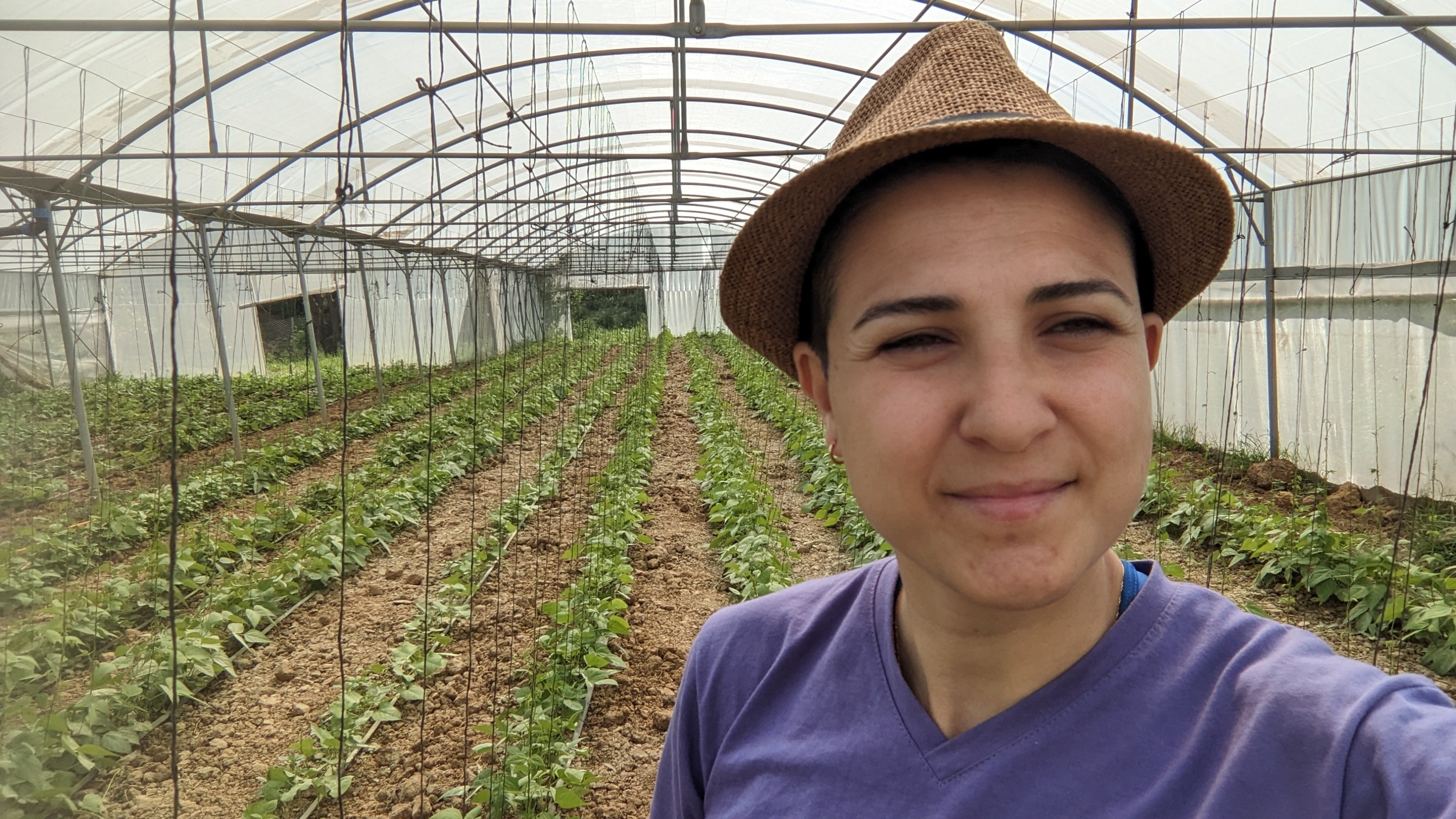
The Prototype
From the field to the framework.
The NASF framework did not begin in a boardroom. It began in the soil of Lebanon's Chouf District, through an agricultural initiative that asked a simple question: can a regenerative cooperative model actually work at scale?
Over 1,400 days of field-tested operational oversight, the answer became a documented, replicable system. That system is the foundation of what NASF is today.
See the ProjectEngage
Bring the NASF framework to your startup.
The NASF framework is available to agricultural startup businesses across the EU and Middle East. Whether you're launching a regenerative farm, an agri-tech venture, or a food systems business, NASF gives you a proven foundation.